Should you bid on your own brand name in Google Ads? Usually, yes
"Why pay for traffic I already rank for?" is the most common objection in paid search — and usually the wrong call. Here's when bidding on your brand name protects revenue, when it doesn't, and how to do it well.
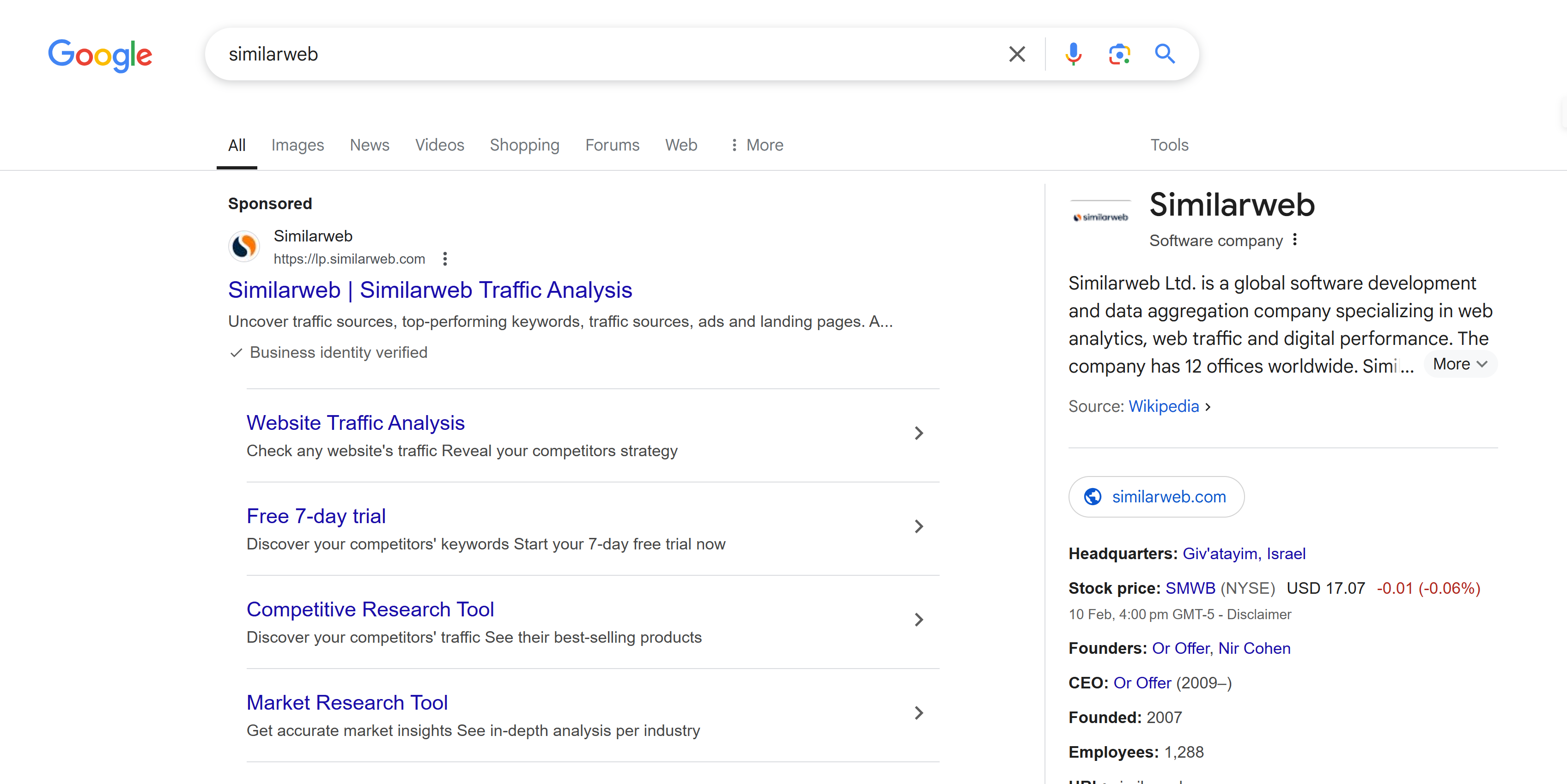
Yes — most businesses should bid on their own brand name in Google Ads, and the reason is simple: if you don't, a competitor can. Branded clicks are cheap, convert exceptionally well, and let you control the top of the results page for searches where the customer already wants you. It's one of the highest-return plays in paid search, and we run it for most Google Ads clients.
The instinct to skip it — "we already rank number one organically" — feels logical and is usually wrong. Organic ranking doesn't stop a competitor's ad sitting above your listing and intercepting your customer. Here's when branded bidding pays, when it doesn't, and how to run it properly.
Organic position one isn't the top of the page — paid ads sit above it. If you're not bidding on your brand, the most prominent spot on a search for your own name is up for grabs.
What branded keywords are
Branded keywords are searches that include your company name, products or unique identifiers — "Acme Co reviews", "buy Acme online". Unlike non-branded terms such as "best SEO company", they carry very high intent: the searcher already has you in mind. They're not discovering you; they're looking for you. That's what makes the click so valuable and so cheap.
Why bidding on your brand is usually worth it
- ✓ You dominate the results page. A branded ad plus your organic listing means you own the top of the page, leaving no room for a competitor's ad to slip above you.
- ✓ You block competitor hijacking. Rivals can and do bid on your brand name to intercept your customers. A branded campaign keeps that top spot yours.
- ✓ You control the message. Organic listings show whatever meta text Google chooses. An ad lets you promote an offer, deep-link to the right landing page, and stay on-message.
- ✓ You lift CTR and Quality Score. High intent means high click-through and low cost-per-click — which improves Quality Score and lowers costs further.
- ✓ You capture ready buyers. Branded searchers are at the bottom of the funnel. A branded ad routes them straight to a conversion-focused page instead of leaving them to wander the site.
Because these users are so close to converting, branded campaigns usually post a high return on ad spend — often the strongest in the account. It pairs naturally with avoiding the common paid-search mistakes that quietly drain budget elsewhere.
"Branded clicks are the cheapest, highest-converting traffic in your account. Leaving that spot open is an invitation to your competitors.
— Whitehat paid-media playbook
Who should bid on their brand — and who can skip it
It's not only for household names. Branded bidding makes sense if you're:
- An established brand with a recognisable name people actively search for.
- In a competitive industry where rivals are likely to bid on your name to siphon your traffic.
- Selling high-ticket or subscription services with longer decision cycles, where capturing the ready buyer is worth a lot.
- Facing imitation or trademark misuse, where a branded ad keeps users on your official site rather than a deceptive third party.
- A local business competing for visibility, where you want branded searches landing on the right page.
Two cases where you can hold off: a brand-new business nobody searches for yet (there's no branded demand to capture), and a very small budget that's better spent first on high-converting non-branded keywords. Add branded campaigns once there's real search demand for your name.
The common objections, answered
- "We rank #1 organically — why pay?" Because paid ads appear above organic results, and organic position one is no guarantee of the top of the page. Skip the branded ad and a competitor can take that spot.
- "Isn't this wasting money?" No. Branded clicks are cheap and convert strongly. The spend reinforces your presence and prevents traffic theft — the return easily justifies it.
- "Why pay for my own traffic?" If a competitor is bidding on your name and you aren't, they're capturing customers who were looking for you. Branded ads also let you promote offers and new products in ways organic listings can't.
Used well, brand bidding is a low-cost, high-return way to defend the search results for your own name, control your message and convert ready buyers. Even when you rank organically, it locks down the page and keeps competitors out. If you'd like us to check whether a competitor is bidding on your brand right now, that's part of a free audit.
We'll check your branded search and account health in a free audit.
A senior strategist reviews who's appearing on your brand terms and where your ad spend is leaking — with a prioritised plan you keep.
Frequently asked questions
Should I bid on my own brand name in Google Ads?
Most businesses should bid on their own brand name, because if you don't, a competitor can take the top of the results page on searches for your own name. Branded clicks are cheap, convert strongly, and let you control your message. The main exceptions are brand-new businesses with no branded search demand and very small budgets.
Why bid on my brand if I rank first organically?
Because paid ads appear above organic results, so ranking number one organically isn't the top of the page. If you skip the branded ad, a competitor can bid on your name and place their ad above your listing, intercepting customers who were specifically looking for you.
Are branded keywords cheaper than non-branded?
Branded keywords are usually much cheaper than non-branded ones, because searchers already know your brand and intent is high, driving strong click-through rates and good Quality Scores. That combination lowers cost-per-click further, which is why branded campaigns often post the highest return on ad spend in an account.
Who should not bid on their brand name?
Two cases can skip branded bidding: a brand-new business nobody searches for yet, since there's no branded demand to capture, and businesses on a very small budget, which are usually better off spending first on high-converting non-branded keywords. Add branded campaigns once real search demand for your name exists.
Can competitors bid on my brand name?
Yes — competitors can legally bid on your brand name as a keyword, and many do, to intercept customers searching for you. They generally can't use your trademark in the ad text, but their ad can still appear above your organic listing. Running your own branded campaign is the most reliable way to hold that top spot.
How do you bid for keywords in Google Ads?
You choose your keywords, set a maximum you will pay per click or hand bidding to Google's automated strategies, then the auction decides placement using your bid and Quality Score together. Higher relevance lowers your cost, which is exactly why bidding on your own brand is usually the cheapest traffic in the account.