Editorial calendar vs content calendar: what's the difference, and do you need both?
An editorial calendar decides the why and what of your content; a content calendar runs the how and when. Confusing the two is why most content plans stall. Here's how each works — and why the best teams run both.
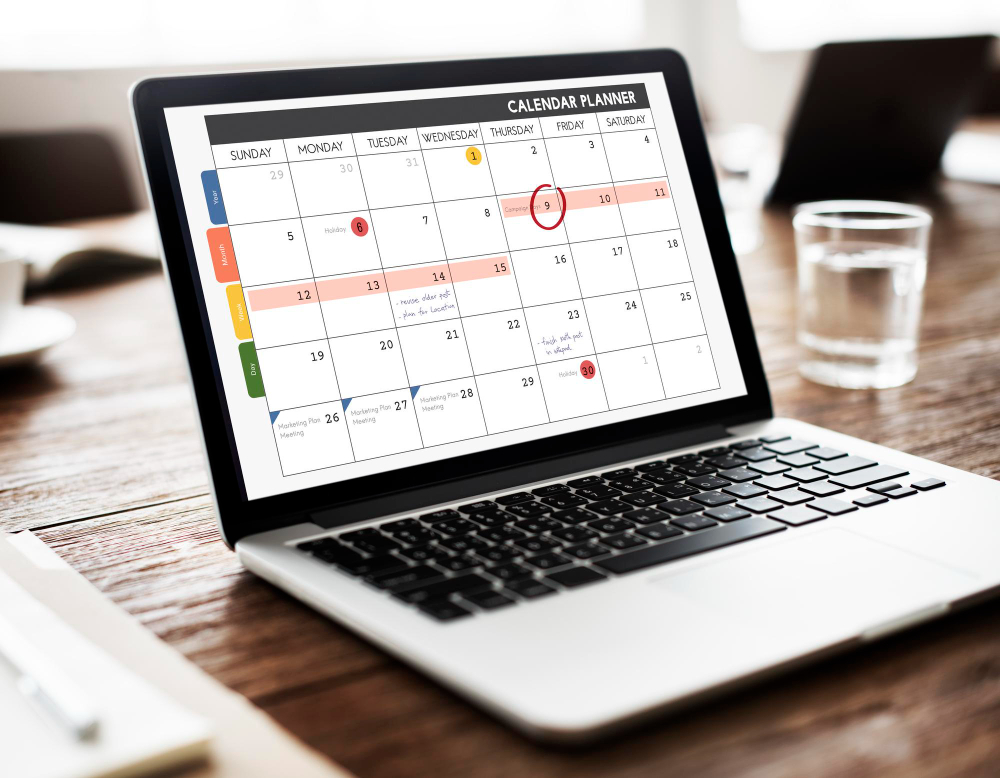
An editorial calendar maps the strategy behind your content — the themes, topics and messages you want to own over months. A content calendar handles execution — the specific pieces, deadlines, formats and publish dates. The editorial calendar answers why and what; the content calendar answers how and when. Mature content teams run both.
The two terms get used interchangeably, and that confusion is exactly why so many content plans stall — strategy with no execution, or execution with no direction. Here's what each tool actually does, and how they work together to make content consistent, on-brand and built to rank.
The short answer
Think of it as altitude. The editorial calendar is the 30,000-foot view — the campaigns, seasonal moments and topic clusters you're building toward. The content calendar is the runway — who's writing what, when it ships, on which channel. One sets the destination; the other gets you there on time.
A strategy nobody executes is a wish list. A schedule with no strategy is busywork. Separate the two and each does its job — together they turn intent into published, ranking content.
What an editorial calendar does
An editorial calendar is your strategic planning tool, usually mapped across a quarter or a year. Its job is to keep content tied to business goals and the moments that matter to your audience.
- ✓ Aligns content to business goals. A product launch in Q2 becomes a planned run of supporting articles, guides and case studies — not a last-minute scramble.
- ✓ Enables long-term planning. A steady, deliberate publishing rhythm is what builds authority and rankings over time.
- ✓ Gives you the bird's-eye view. You can spot content gaps, balance your topic mix and make sure you're reaching every audience segment.
What a content calendar does
A content calendar is where strategy becomes work. It's tactical, detailed and updated often — the operating system for getting content out the door.
- ✓ Organises the workflow. Owners, deadlines and stages for every piece, so writers, designers and SEO specialists stay in sync.
- ✓ Guarantees consistency. A reliable publishing schedule keeps your audience engaged and signals freshness to search engines.
- ✓ Tracks performance. Tie each piece to its results and you learn what resonates, then steer the plan with data rather than instinct.
Why the best teams run both
You can survive on one, but the strongest content operations use both because they answer different questions. The editorial calendar makes sure you're publishing the right things, aligned to goals and seasonal trends. The content calendar makes sure those things actually ship, on schedule and to standard. Strategy plus execution — that's the whole game.
We'll build the content strategy and the schedule to deliver it.
A senior strategist maps your topics, channels and cadence into a plan you can run — yours to keep, whether or not you work with us.
If you can only run one
Choose by where your bottleneck is. If you have plenty of ideas but they never get published on time, you need a content calendar to impose order and accountability. If you're publishing steadily but the work feels scattered and off-strategy, you need an editorial calendar to give it direction. Most teams discover they need whichever one they don't already have.
How this powers SEO
For organic growth, the two calendars are a quiet superpower. The editorial calendar lets you plan around topic clusters and search trends — built on real keyword research — so your content builds topical authority instead of wandering. The content calendar makes sure each piece is optimised and published consistently, and consistency is something search engines reward.
It's the same discipline we apply to creating valuable website content: decide what's worth saying and to whom, then publish it reliably. Get both calendars working and your content stops being a series of one-off posts and starts compounding — which is exactly what our SEO team builds for.
Frequently asked questions
What is the difference between an editorial calendar and a content calendar?
An editorial calendar maps the strategy behind your content — the themes, topics and messages you want to own over months. A content calendar handles execution — the specific pieces, deadlines, formats and publish dates. The editorial calendar answers why and what; the content calendar answers how and when.
Do I need both an editorial calendar and a content calendar?
Mature content teams use both because they solve different problems. The editorial calendar keeps you publishing the right things, aligned to goals and seasonal trends. The content calendar makes sure those things actually ship on schedule. Strategy without execution is a wish list; execution without strategy is busywork.
Which calendar should I start with?
Start with whichever fixes your bottleneck. If you have ideas but never publish on time, build a content calendar to impose order and accountability. If you publish steadily but the work feels scattered, build an editorial calendar to give it direction tied to business goals and search trends.
How do content calendars help SEO?
Content calendars keep publishing consistent, which search engines reward, and ensure each piece is optimised before it ships. Paired with an editorial calendar that plans around topic clusters and search trends, they help content build topical authority over time rather than existing as disconnected one-off posts.
How far ahead should an editorial calendar plan?
An editorial calendar typically spans a quarter to a year, so you can align content with product launches, seasonal moments and bigger campaigns. The content calendar then works in shorter cycles — often weekly or monthly — to schedule the individual pieces that deliver that longer-term plan.
What is a content calendar?
A content calendar is the production schedule: what gets published, on which channel, on what date, and who owns each step. It answers the question of what ships this week. It sits underneath the editorial calendar, which decides what is worth publishing in the first place and why it matters.
What is the difference between editorial strategy and content strategy?
Content strategy governs everything you publish across every channel — audience, formats, systems and measurement. Editorial strategy is narrower: the themes, the point of view and the standards your published work holds to. Editorial strategy sits inside content strategy, in the same way an editorial calendar sits inside a content calendar.