Custom website vs template (Squarespace, Wix): which is right for your business?
A template gets you online this week; a custom build is engineered to grow and convert for years. Here's an honest breakdown of the trade-offs — cost, speed, SEO, scalability — so you pick the right one for where your business is heading.
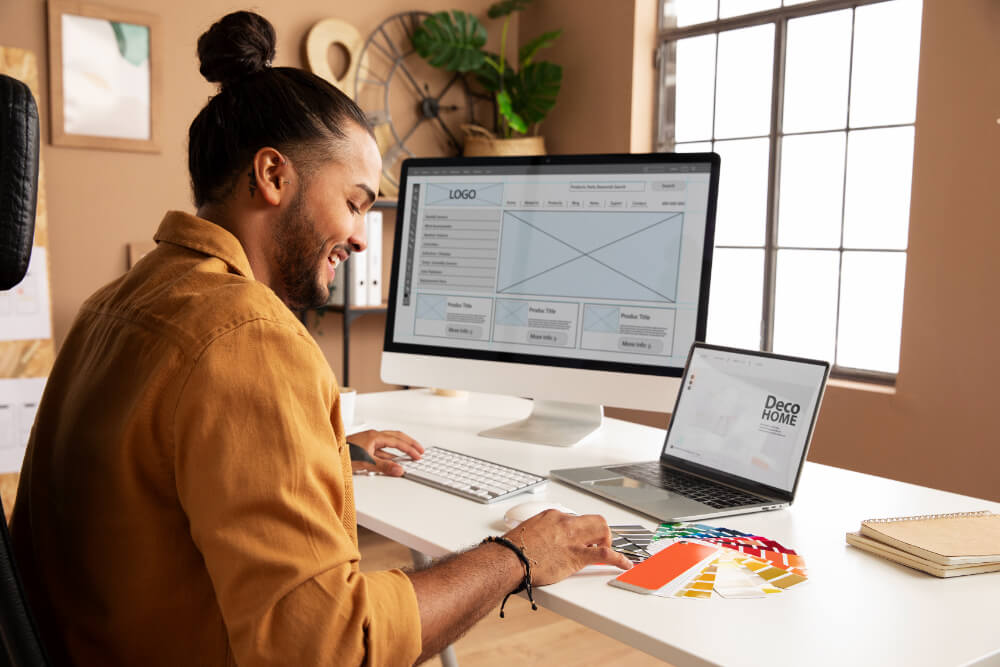
The honest answer to "custom website or template?" is: it depends on where your business is heading. A template solution like Squarespace or Wix gets you online quickly and cheaply. A custom website, built by a web design team, is engineered around your brand, your conversions and your growth. Both are valid — the wrong choice is just the expensive one to unwind later.
Your website is rarely a cost; it's your hardest-working salesperson. First impressions form in seconds, and visitors leave sites that load slowly or look generic. So the real question isn't which is cheaper today — it's which earns more over the next three years.
Tight budget and need to launch fast? Start on a template. Building a brand, planning to scale, or relying on the site to generate leads? A custom build pays for itself.
The core difference
A template is a pre-designed layout you customise within set limits — fast and affordable, but you work inside the platform's rules. A custom website is designed and built from scratch around your specific goals, audience and brand, with no ceiling on what it can do. One is a suit off the rack; the other is tailored to fit.
Custom websites: the trade-offs
A custom build gives you control and room to grow — at a higher upfront cost.
- ✓ Full design and functional control. Every element reflects your brand and serves your audience — the surest way to stand apart from competitors on the same templates.
- ✓ Scalability. New features, integrations and complexity slot in as you grow, without hitting a platform wall.
- ✓ Performance. Clean, purpose-built code avoids the bloat of one-size-fits-all templates, so pages load faster.
- ✓ SEO headroom. You control structure, speed and markup — the foundations our SEO team needs to rank you. More on that link in our piece on web design vs web development.
The downsides are real: a higher initial investment, a longer build, and ongoing maintenance to keep it secure and current. For an early-stage business on a tight budget, that's a meaningful commitment.
Templates (Squarespace, Wix): the trade-offs
Template platforms exist for speed and accessibility, and at that they're genuinely good.
- Cost-effective and quick. Low or no upfront cost, and a site live in days rather than weeks — ideal when you need a presence now.
- Beginner-friendly. Drag-and-drop editors mean no code, with built-in features like forms, galleries and basic SEO settings.
- Plenty of choice. Hundreds of starting points across industries get you most of the way there.
But the limits show as you grow: customisation is capped by the platform, shared templates can leave you looking like everyone else, code is often heavier (which can drag on speed and rankings), and you're tied to the platform's pricing and rules. Outgrowing a template later means a rebuild — the cost you were trying to avoid, paid twice.
"A template is the cheapest website right up until the day it caps your growth. Then it's the most expensive one you ever bought.
— Whitehat web design playbook
DIY builder vs a web design agency
It's easy to see why DIY appeals: you control the process and it looks cheaper. But time is money, and building a site well takes time away from running your business. Builders are also less flexible than they first appear — you're often boxed in by the available templates and plugins.
An agency brings more than build skill. Your digital presence is more than a website — it's branding, SEO and a clear path to conversion, working together. A team can integrate those so the site doesn't just look good, it generates enquiries. That's the difference between a website as a brochure and a website as a growth channel — and where a custom build with us starts to compound.
We'll tell you straight what your site needs in a free audit.
A senior strategist reviews your current site and goals, then recommends custom or template with a clear, costed path — yours to keep.
How to decide
Weigh five factors honestly:
- Budget. Limited and immediate? Template. Investing in long-term growth? Custom.
- Timeline. Need it live this week? Template. Have a few weeks for something that lasts? Custom.
- Branding. Need a distinctive, memorable brand? Custom. Just need a tidy presence? A template will do.
- Technical capacity. No technical resource and want to self-manage? Template. Happy to work with a team? Custom.
- Growth plans. Expecting complexity, new features or scale? Custom gives you the room.
If you value flexibility, performance and a presence that's unmistakably yours, a custom website is the stronger long-term play. If cost and speed lead, a well-chosen template gets you trading without breaking the bank. Either way, the smartest move is to be clear about where the business is heading before you build — because the website should be built for the company you're becoming, not just the one you are today.
Frequently asked questions
Should I use a custom website or a template like Squarespace?
Use a template like Squarespace or Wix if you need to launch quickly on a tight budget and don't expect complex needs. Choose a custom website if you're building a distinctive brand, plan to scale, or rely on the site to generate leads. Templates are cheaper now; custom builds usually earn more over time.
Are custom websites better for SEO than templates?
Custom websites give you more SEO headroom because you control site structure, page speed and markup — the technical foundations that drive rankings. Templates can rank fine for simple sites, but their shared, heavier code and limited customisation can cap performance as you grow and compete for harder keywords.
Is a template website cheaper than a custom one?
A template is cheaper upfront — often low or no cost to start. But if you outgrow it, migrating to a custom solution means paying to rebuild, so the total cost can end up higher. Custom builds cost more initially but avoid that rebuild and are engineered to grow with the business.
Why use a web design agency instead of building it myself?
An agency brings more than build skill — it integrates branding, SEO and conversion design so your site generates enquiries rather than just existing. DIY builders look cheaper, but they cost you time, box you into available templates and rarely deliver the performance or distinctiveness a growing business needs.
When should I move from a template to a custom website?
Move to a custom website when the template starts limiting you — when you can't add the features you need, the site looks too generic, page speed is hurting rankings, or you're scaling and the platform can't keep up. Those signs mean the template is now capping growth rather than enabling it.